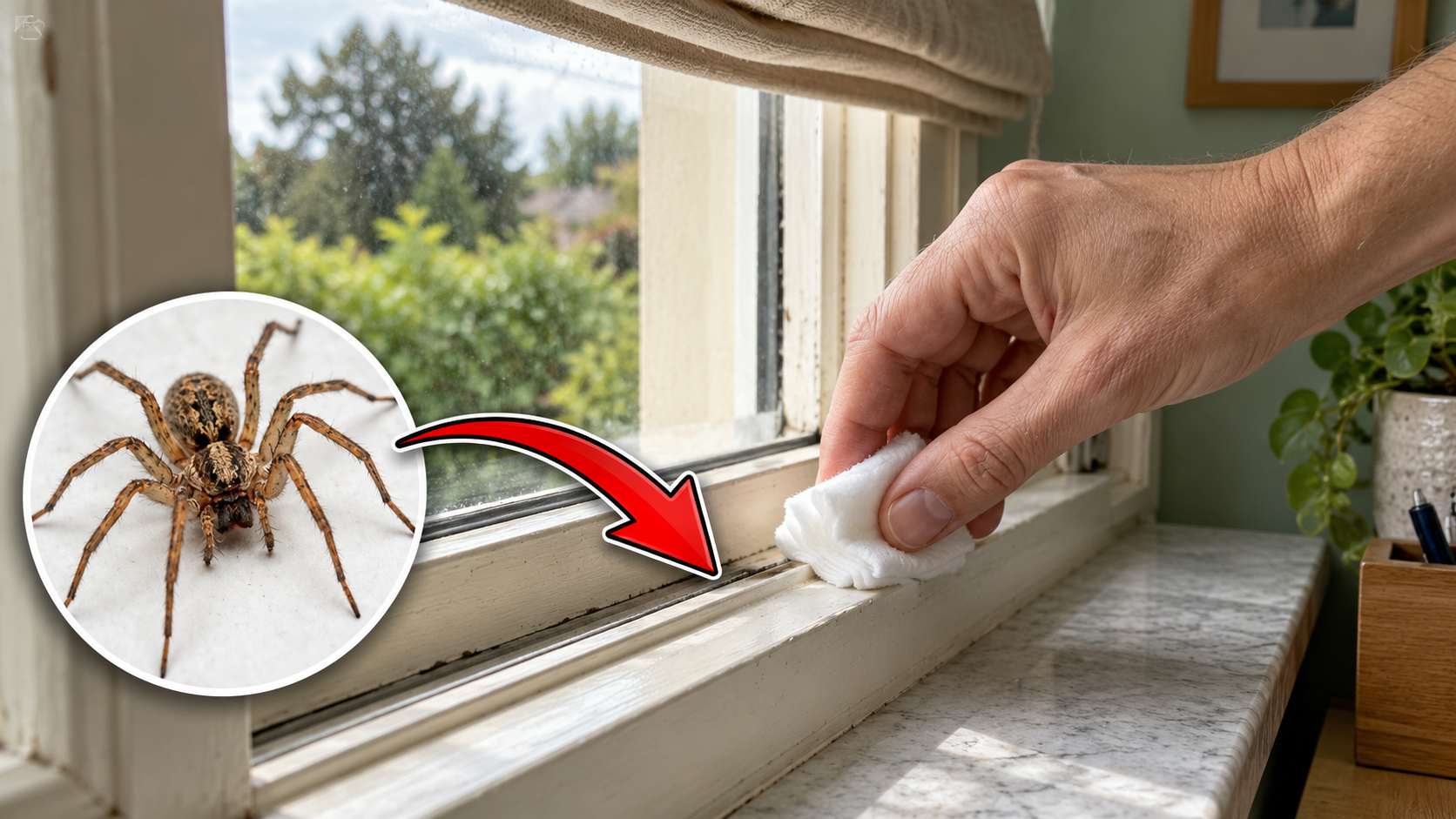
Do spiders bother you? Here is an approach to limit their presence
When spiders repeatedly appear in the same room, the most useful first step is often to inspect a nearby entrance. A loose screen edge or damaged door seal gives you something specific to improve. Strong fragrances and scattered household remedies do not guarantee that an entire home will stay spider-free. A practical plan starts with observations, manageable cleaning, and an understanding of where insects may be gathering.
You do not need to empty every cupboard after one sighting. Focus on repeated locations and changes you can maintain. The following approach helps you handle occasional visitors, make less-used areas easier to inspect, and recognize situations in which identification or professional help is the better choice.
Understand why a spider may be indoors
Buildings offer shelter and sometimes small insects to feed on. Some spiders live regularly inside, while others arrive accidentally or during their movements. One spider is not automatically evidence of an infestation. Its presence is not a verdict on your housekeeping, either. A clean room can still have an open entrance or a quiet corner.
Record where sightings occur. A repeated location by a window suggests checking the frame and screen. Webs behind the same shelf may indicate a place that is rarely disturbed. Many tiny insects near a light can help explain why a hunting spider finds the area useful. A few specific notes are more informative than the feeling that spiders are everywhere.
Check the most likely entrance first
Look along the entire edge of a window screen, including corners and fittings. The center may be intact while one side has separated from its frame. Repair only with components appropriate to the system, and make sure the window can still operate safely. A small local correction may be easier to maintain than a complicated treatment routine.
Inspect accessible door seals and other obvious gaps. Do not block required ventilation, window drainage openings, or appliance air supplies. If you do not understand an opening’s function, obtain advice before sealing it. In rented or shared housing, coordinate structural changes with the responsible person. A removable screen can be useful when it is suitable and securely fitted.
Deal with an isolated spider safely
For a spider identified as nonproblematic in a location you can reach safely, a broad container and a stiff card may help. Place the container gently over the spider, slide the card beneath it, and keep the two together. Avoid crushing the animal or making abrupt movements. This method is only worthwhile if you feel comfortable and can remain on a stable surface.
Do not handle an unknown spider with bare hands. Species of medical concern occur in some regions, and size or color alone does not provide a reliable identification. If you are uncertain, keep your distance and ask for help. A photograph taken without getting close can support identification. Do not climb onto unstable furniture to reach a high corner.
If relocation is appropriate, choose a sheltered place suited to the species. An indoor-adapted spider is not necessarily suited to an exposed outdoor surface in cold conditions. Local natural-history advice can help when you are unsure. The goal is to resolve the encounter without creating unnecessary risk through close handling or an unsafe reach.
Remove old webs and improve access
Abandoned webs can be removed as part of ordinary cleaning with a suitable duster or vacuum attachment when dealing with normal household dust. Protect delicate finishes, lamps, and fabrics. Use an extension tool from a stable position for high areas. Cleaning an electrical fitting must follow the fitting’s instructions rather than an improvised wet method.
Look at whether the area will be easier to inspect next time. A small adjustment to stored items may reveal a corner that has been hidden for months. Closed, labeled containers can make a storage room more manageable. Do not compromise furniture anchors or stability to create access. The aim is practical visibility, not removing every object from the room.
Investigate insect concentrations
If small flies or other insects keep gathering by a window, look for their source. Ripening food, damp waste, or an unprotected entrance may require different actions. Choose measures according to the insects actually present. Spraying the whole room without identifying the problem does not replace removing the conditions that keep attracting them.
Keep food appropriately stored, clean spills, and maintain waste containers. The sight of a spider does not require disinfecting the entire home. Normal cleaning directed at relevant places is easier to sustain than occasional intensive treatment. If many insects continue appearing, identification by a qualified professional can make the next step more precise.
Consider exterior lighting and brought-in objects
A light close to an open doorway can concentrate insects near that entrance. Consider whether the light is used when needed and whether its placement is appropriate. Preserve necessary safety lighting. Changes to fixed electrical installations belong with qualified personnel, and the purpose is to avoid unnecessary concentrations rather than leave an important route unlit.
Inspect items that have been outside before bringing them into frequently used rooms. Garden cushions, planters, and stored decorations can shelter small animals. Check them in good light and move them calmly. Do not put your fingers into cavities you cannot see. This can be part of normal seasonal tidying rather than a constant inspection of everything you own.
Be realistic about scents and household remedies
Peppermint, citrus peels, chestnuts, and essential oils are often presented as universal spider deterrents. A scent noticeable to people does not show that every spider species will avoid a whole room. Amount, distance, ventilation, and time all change exposure. A short observation in one corner cannot establish dependable protection across a building.
Concentrated oils should not be spread indiscriminately on floors, curtains, or frames. They may be unsuitable for certain materials, people, or pets. Fruit peels left in corners can also deteriorate and create their own cleaning problem. If you enjoy a fragrance, follow the product’s intended use and treat it separately from the practical work of protecting entrances.
Create a routine that fits ordinary cleaning
Link inspections to jobs you already do. When cleaning a window, check the screen edges. When sorting a shelf, look at the adjacent corner and remove abandoned webs. Keep a usable path in a storage area. These small habits make changes easier to spot and reduce the need for a major reorganization after every sighting.
After repairing an entrance, revisit the same location over time. Compare reasonably similar conditions and remember that weather and door-opening habits may change activity. One isolated visitor does not mean every measure has failed. Look instead for fewer repeated concentrations and a space that remains easier to inspect and maintain.
Know when a specialist is useful
Get help when numerous spiders appear in one area, the species is unknown, or the place that needs inspection is unsafe to reach. A strong fear that prevents you from using a room also deserves a practical solution. A useful assessment begins with identification and likely entrances, rather than automatically recommending a broad treatment.
Ask what evidence was found, what result is realistic, and which maintenance steps you can carry out afterward. Keep the instructions so you can recognize meaningful changes. Shared buildings may need coordinated attention to areas outside your control. Reporting specific locations and dates helps the responsible person investigate efficiently.
Frequently asked questions
Can a tidy home still have spiders? Yes. Tidiness makes inspection easier but does not close every entrance or remove every insect. One spider does not reveal the cleanliness of an entire house.
Must every web be removed immediately? In regularly used rooms, you can include old webs in normal cleaning. In a suitable secondary space, tolerating an identified nonproblematic spider may be an option. The choice depends on the species, location, and your comfort.
Does a screen solve everything? An intact screen protects one route. Other gaps may remain, and some spiders may already be indoors. Use it alongside observations of recurring places and a repeatable cleaning routine.
What can you do first today? Inspect the location of the most recent repeated sighting and correct one concrete defect if you find it. A small verifiable change is a clearer starting point than repeatedly switching remedies without knowing which conditions are improving.