Dull floors and streaks after mopping: take a look at what is added to the water
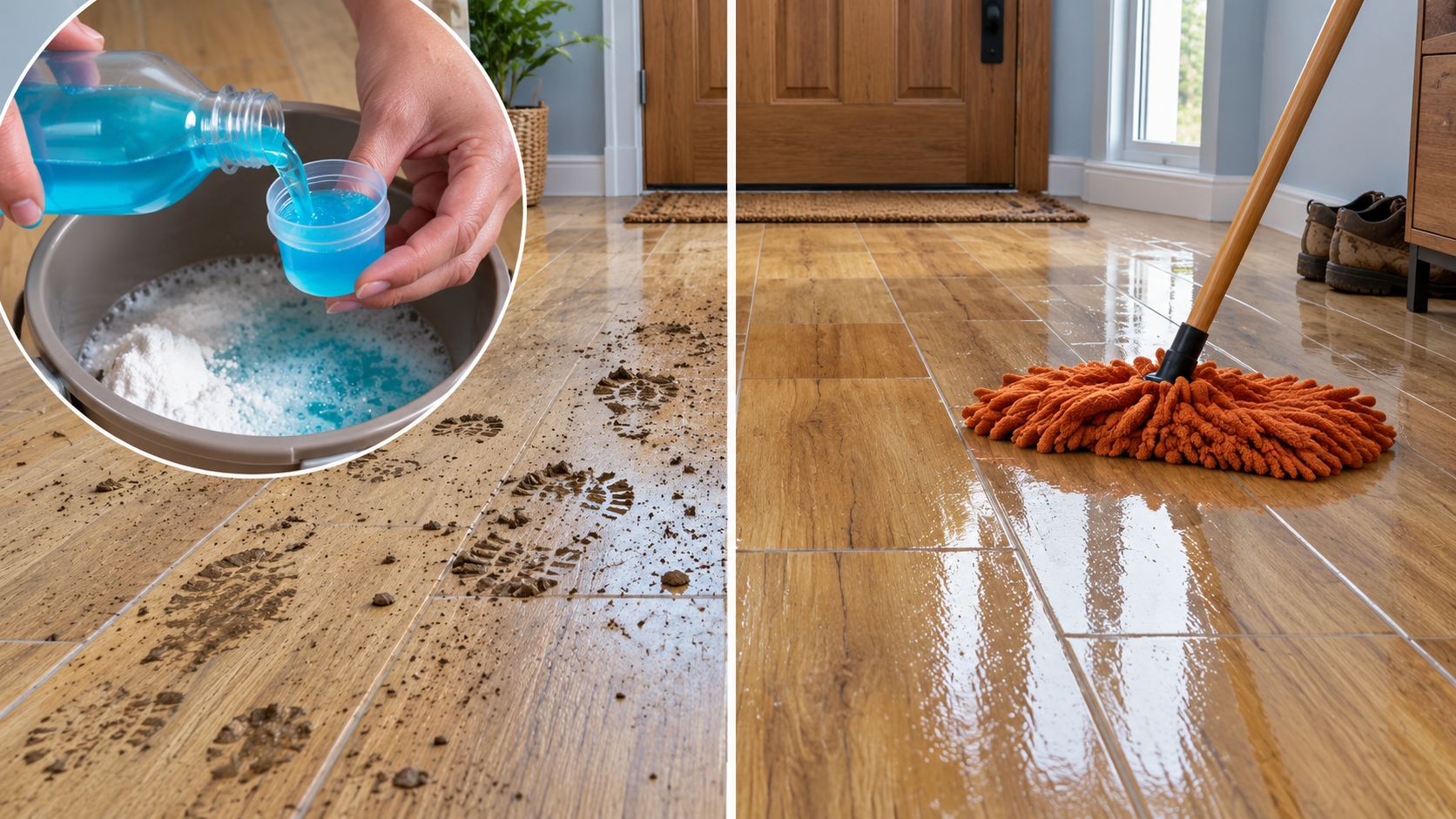
The important addition may be a smaller, correctly measured dose of a suitable floor cleaner. Too much product can leave the film you are trying to remove. Check the floor finish, mop pad, and water before reaching for a new household ingredient.
## Streak-free floors depend on the surface and the dose
A dull floor does not always need more cleaner. Excess detergent, dirty water, and a loaded mop pad can leave a film that becomes visible when the floor dries. Adding another ingredient may increase that film rather than remove it. First identify the surface: ceramic tile, natural stone, vinyl, laminate, and sealed wood have different care requirements and moisture limits.
The useful addition to a bucket is the correctly measured amount of a cleaner approved for that floor. There is no universal kitchen ingredient that makes every surface glossy. Vinegar can damage acid-sensitive stone, while oily additions may leave residue. A matte finish is also meant to remain matte. Cleaning should restore an even appearance, not force a shine the material never had.
### A practical washing sequence
Remove loose grit and dust before damp mopping. Use a clean pad and prepare the solution according to the cleaner’s label. Wring the pad appropriately, particularly on moisture-sensitive floors. Work in manageable lanes and change the water when it becomes dirty. Keep liquid from pooling along baseboards, joints, and transitions between materials.
If streaks remain, test a small area after checking the dosage and pad cleanliness. Where the manufacturer permits it, a lightly damp pass with clean water may help remove leftover product. Repeatedly soaking wood or laminate is not a suitable correction. Let the test area dry before deciding whether the appearance has improved.
### Look after the mop as well as the floor
Rinse or wash reusable pads according to their care label and let them dry before storage. Fabric softener can reduce the absorbency of some cleaning textiles. A pad that smells unpleasant or still carries greasy residue is unlikely to produce a clean finish. Keep separate pads where practical for heavily soiled areas and the rest of the home.
Persistent cloudy patches can also come from wear, a damaged finish, or old layers of incompatible products. Those problems require identification before further treatment. Avoid stacking polish, oil, and cleaner in the hope that one will hide the marks. A simple routine with the right product, clean equipment, and controlled moisture is easier to evaluate and maintain.
## Prepare the area before you begin
Start by inspecting the floor and the mop pad in clear daylight. A deposit sitting on the surface is different from a change in the material itself. Loose dust, a greasy film, and a hard mineral deposit do not respond to the same approach. Discoloration caused by age may remain after the surface is perfectly clean. Making that distinction early helps you avoid repeated treatments that cannot solve the underlying problem.
Look for care instructions and identify the material whenever possible. Check neighboring parts as well as the main surface. Seals, painted edges, hinges, and decorative finishes may tolerate less moisture or friction than the larger area around them. A cleaner that is suitable for one component is not automatically suitable for the entire object. When the finish is unknown, start conservatively rather than trying an aggressive restoration method.
Put your supplies within reach before starting. A clean soft cloth, a second cloth for finishing, and a suitable soft brush are often more useful than a shelf full of products. Keep bathroom cleaning supplies separate from items used around food. Leave cleaners in their original containers so that dilution directions, contact times, and precautions remain available. Do not transfer an unidentified mixture into a beverage bottle.
## Test a small area and let it dry
If the care instructions allow your chosen method, test it in an inconspicuous spot. Treat a small section and inspect it after it has dried completely. A wet surface can look darker or shinier and create a misleading impression of improvement. Watch for color transferring to the cloth, a sticky finish, swelling at an edge, or a change in texture. These are reasons to stop and reassess.
For the floor and the mop pad, compare the test area with an adjacent untreated section. That gives you a useful reference instead of relying on memory. Look at both sections under the same light. If the treated part is genuinely cleaner and the material has not changed, continue gradually. If the difference disappears as soon as the surface dries, additional rubbing may not produce the result you were expecting.
## Use a controlled amount of cleaner
Follow the dilution directions for the product you select. The recommended amount is not a minimum that should automatically be increased. Excess cleaner can leave a film, require additional rinsing, or produce an uneven finish. Measure when the label calls for a measured dose. Prepare only what you need, rather than storing a homemade mixture whose ingredients and concentration may be forgotten later.
Do not combine different cleaners. In particular, chlorine bleach must not be mixed with acids, vinegar, or ammonia. Familiar household ingredients are not automatically compatible with one another. If you change methods, remove the previous product as directed before applying anything else. Never assume that a product is gone simply because its smell has faded. Follow both the surface instructions and the cleaner’s label.
Work in manageable sections. Turn the cloth when one side becomes dirty, and replace water that is carrying visible residue. Using the same loaded cloth over the entire area tends to redistribute dirt. Where damp cleaning is appropriate, finish with a separate clean, well-wrung cloth to remove remaining product. Dry moisture-sensitive edges and connections instead of leaving water to collect in places that are difficult to inspect.
## Check the result beyond the obvious area
Inspect the floor and the mop pad from more than one angle when you have finished. Light coming from the side makes streaks and overlooked edges easier to see. Check accessible corners and the spots that receive the most handling. Those small areas can retain residue after a quick cleaning. A focused second pass is often more useful than repeating the full treatment across sections that are already clean.
A remaining mark does not necessarily call for stronger chemicals. It might be a scratch, an old color change, or damage to a protective finish. If the surface is becoming rough, soft, cracked, or flaky, further rubbing can make the problem worse. At that point, identify the condition of the material before continuing. Cleaning removes deposits; repairs and refinishing address different kinds of deterioration.
## Build a routine around actual use
Choose an upkeep schedule that matches how the item is used. Frequently handled areas need closer attention than surfaces that are rarely exposed. Watch for practical signals: a returning deposit, persistent dampness, an unfamiliar odor, or a decline in normal function. These observations are more useful than applying one rigid schedule to every household, regardless of ventilation, water quality, occupancy, or daily habits.
If several people share cleaning duties, agree on one straightforward method. That helps prevent products from being applied one after another without anyone knowing what is already present. Keep a note of the compatible cleaner and store care instructions where they are easy to find. The next cleaning session should be simpler because you can repeat a known process instead of experimenting again from the beginning.
## Frequently asked questions about gentle maintenance
### Does a strong fragrance mean the cleaning worked?
No. Fragrance says little about whether residue has been removed. It can cover an odor without addressing the source. If the smell returns, inspect for trapped moisture, missed deposits, or an underlying maintenance issue. Adding another scented product does not replace that check. A satisfactory result should be judged by the condition of the surface and its normal function, not by the intensity of its perfume.
### When is a second treatment worthwhile?
A targeted second pass may help when the first one visibly removed dirt without changing the material, provided the instructions allow repetition. Concentrate on the remaining affected area. If the first attempt made no difference, reconsider the diagnosis before continuing. Repeating an ineffective treatment for longer can increase wear without reaching the cause of the mark or deposit.
### How can this task take less time next time?
Keep suitable supplies ready, measure the product correctly, and include the finishing step from the outset. Missing the final wipe, rinse, or drying stage often creates the need to start over. For the floor and the mop pad, a complete, repeatable process is more useful than a dramatic shortcut whose result disappears after the surface dries or the item is used again.