Discover 5 Easy Steps to Successfully Propagate Your Own Beautiful Roses
5 Easy Steps to Successfully Propagate Your Own Beautiful Roses
Introduction
Picture this: You’re in your garden, surrounded by lush greenery and an array of vibrant flowers, yet one thing catches your eye—the stunning beauty of rose bushes. They’ve always captivated you, but you wonder how to bring more of these lovely blooms into your garden. The idea of propagating your own roses might seem daunting, but it’s an achievable goal. Let’s explore how you can effectively propagate your own roses, transforming your garden into a fragrant haven.
Step-by-Step Guide to Rose Propagation
To successfully propagate roses, you’ll need a few key materials and techniques. Here’s a comprehensive guide to help you through the process.
Required Materials
Before you begin, gather the following materials:
- Healthy rose plants
- Sharp pruning shears
- Potting soil
- Containers for planting
- Water
Choose the Right Time
Selecting the correct time for propagation is crucial to success. The best time to propagate roses is during
- Late spring
- Early summer
This is when the rose cuttings have the best chance of rooting due to warmer temperatures and active growth.
Taking Cuttings
- Select healthy stems from an established rose plant.
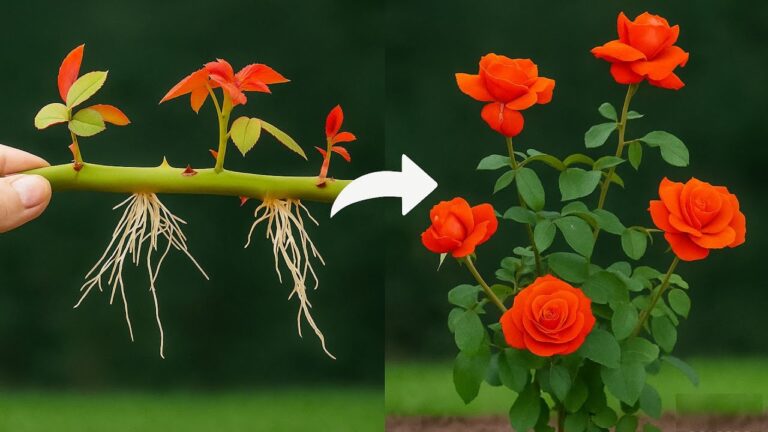
- Cut a stem approximately 6 to 8 inches long, ensuring it has at least one leaf node.
- Remove the lower leaves, leaving just a few at the top.
This helps the cutting focus its energy on root development instead of leaf maintenance.
Preparing for Planting
To prepare your cuttings for planting, consider the following:
- Dip the cut end in rooting hormone to encourage root growth.
- Plant the cutting in a container filled with potting soil, burying it about 2 inches deep.
- Water the soil lightly to ensure it’s moist but not soggy.
This creates an ideal environment for your cuttings to take root.
Caring for Your Cuttings
Now that your rose cuttings are planted, proper care is essential:
- Place the containers in a warm, well-lit area, but avoid direct sunlight which can scorch the cuttings.
- Maintain soil moisture by watering when the top inch feels dry.
- Consider using a plastic cover or a mini greenhouse to retain humidity.
Common Mistakes to Avoid
Despite the simple process, many encounter challenges while propagating roses. Here are areas where you might go wrong:
- Overwatering your cuttings can lead to root rot.
- Choosing unhealthy stems can hinder success.
- Planting in too much direct sunlight can damage your cuttings.
- Neglecting the humidity levels can dry out the cuttings.
- Failing to use rooting hormone can slow down the rooting process.
FAQ
What types of roses are best for propagation? Hybrid tea roses and floribunda roses are great choices for beginners due to their hardiness.
How long does it take for rose cuttings to root? Typically, it takes between 2 to 8 weeks for rose cuttings to develop roots, depending on the variety and conditions.
Can I propagate roses from store-bought bouquets? Yes, you can use cuttings from bouquets, but keep in mind that some may be treated with preservatives that can hinder rooting.
Conclusion
By following these steps, you can successfully propagate your own beautiful roses, enriching your garden with their vibrant colors and fragrances. Have you tried propagating roses before, or is this your first attempt? Share your thoughts and experiences in the comments!