Grow Rose Cuttings Roots in 1 Night with This Simple Trick!
How to Grow Rose Cuttings Roots Overnight: A Simple Trick
- Introduction
- Benefits of Growing Rose Cuttings
- Materials Needed
- Step-by-Step Guide to Rooting Rose Cuttings
- Common Mistakes to Avoid
- FAQ
- Conclusion
Introduction
Have you ever felt the joy of snipping a beautiful rose from your garden, only to wonder how to propagate it successfully? This common challenge leaves many aspiring gardeners looking for a reliable method. While there are various ways to grow rose cuttings, some can be time-consuming, leaving you frustrated. Discover how to simplify this process and encourage strong roots to form quickly. Continue reading to find a straightforward solution.
Benefits of Growing Rose Cuttings
Taking rose cuttings is a rewarding experience that fosters both creativity and connection to nature. Here are some benefits you’ll enjoy:
- Cost-effective: Propagating your own roses saves money, allowing you to cultivate a beautiful garden without purchasing new plants.
- Customization: You can select your favorite roses and create a personalized garden filled with varieties you adore.
- Sharing: Growing more roses means you can share your plants with friends and family, spreading the love of gardening.
Materials Needed
Before diving into the process, gather the necessary materials to ensure your success:
- Healthy rose stems: Look for cuttings that are about 6 inches long, with at least two nodes.
- Sharp garden scissors: Ensure they are clean to avoid introducing any diseases.
- Rooting hormone: This encourages faster root growth.
- Containers: Use small pots or seed trays filled with potting mix.
- Water: Keep your cuttings moist but not soggy.
Step-by-Step Guide to Rooting Rose Cuttings
Follow this practical guide to successfully grow your rose cuttings:
- Choose: Select healthy rose stems for cuttings, ensuring they are disease-free.
- Prepare: Cut the stems just below a node and remove any leaves on the lower half.
- Dip: Submerge the cut end into rooting hormone, shaking off any excess.
- Plant: Place the cuttings in your prepared containers filled with potting mix, ensuring they are securely positioned.
- Water: Gently moisten the soil to promote moisture retention.
- Cover: Use plastic bags or a mini greenhouse to create a humid environment.
- Monitor: Check daily for moisture and avoid overwatering.
Additional Tips for Successful Rooting
- Place your containers in indirect sunlight, as direct sun can scorch the cuttings.
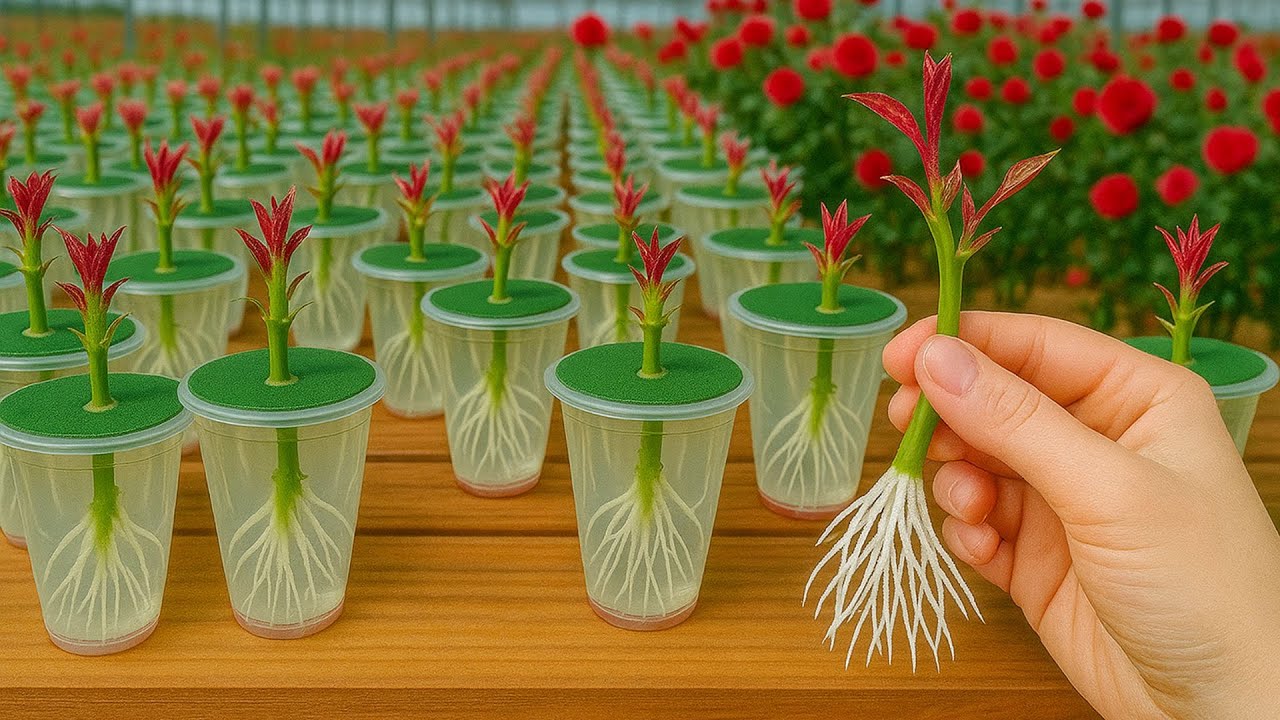
- Be patient; roots can develop as quickly as one night, but may take longer depending on conditions.
Common Mistakes to Avoid
While propagating rose cuttings can be straightforward, some common mistakes can hinder your success. Be mindful of these:
- Using cuttings from weakened or diseased plants, which can lead to failure.
- Neglecting to remove lower leaves, causing rot in the soil.
- Incorrectly handling rooting hormone—too much can harm the plant, while too little can prevent rooting.
- Failing to maintain humidity, which is crucial for successful rooting.
FAQ
How long does it take for rose cuttings to root?
Typically, rose cuttings can root in as little as a few days to several weeks, depending on the conditions.
Can I propagate rose cuttings in water?
Yes, you can. Place cuttings in a jar of water, changing it regularly, but roots may take longer to develop compared to soil.
What type of roses is best for cuttings?
Most hybrid tea roses and floribunda roses work well for cuttings, but ensure they are healthy.
Conclusion
Growing rose cuttings can be a simple and rewarding project in your gardening journey. By following the steps outlined above and avoiding common pitfalls, you can multiply your favorite roses quickly. What varieties of roses do you hope to propagate in your garden? Share your thoughts in the comments below!